Introduction
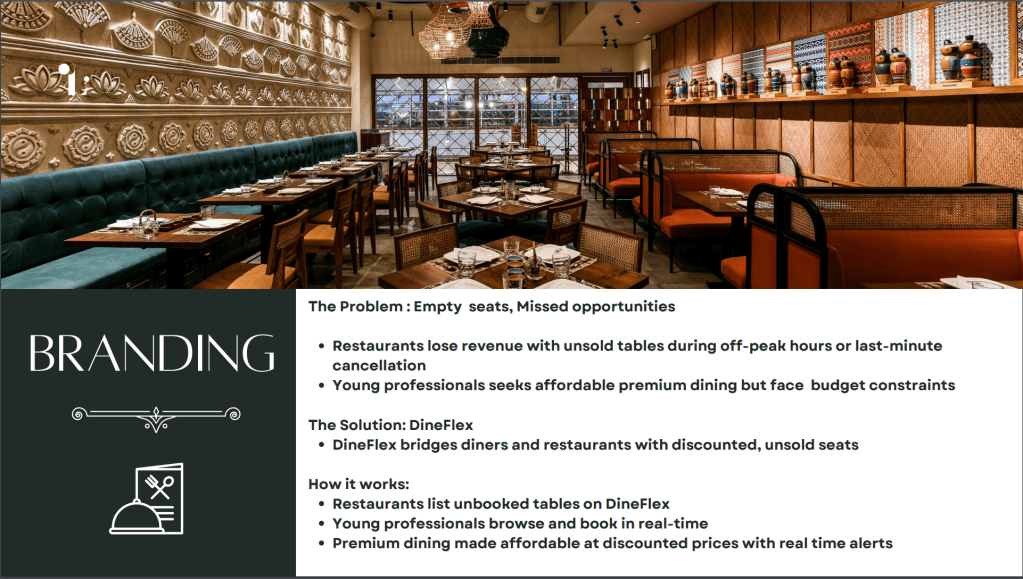
The restaurant industry faces a recurring problem—empty seats and lost revenue during off-peak hours. At the same time, many food lovers and young professionals wish to enjoy premium dining experiences but find them too expensive.
This led to the conceptualization of DineFlex, an idea that explores how fractional restaurant reservations could bridge this gap. The idea revolves around allowing restaurants to list unfilled tables at discounted prices, making fine dining more accessible and affordable.
This blog outlines the thought process behind DineFlex, how it could work, and the marketing strategies that could drive its success.
Identifying the Problem: Empty Seats & Missed Opportunities
Restaurants often struggle with:
- Unfilled tables during non-peak hours, leading to revenue loss
- Last-minute cancellations, leaving reservations unoccupied
- Limited strategies to optimize seat utilization dynamically
At the same time, diners—especially young professionals and budget-conscious foodies—are eager for premium dining experiences but are restricted by high prices.
The Idea: How DineFlex Could Work
DineFlex was conceptualized as a real-time dining marketplace that connects diners with unsold restaurant seats at discounted prices.
The potential working model:
1. Restaurants list unbooked tables on the DineFlex platform
2. Diners browse and book these seats at lower rates
3. Dynamic pricing adjusts discounts based on demand and availability
This system would allow restaurants to maximize revenue while giving diners an affordable way to experience luxury dining.
Assessing Market Fit & Potential Demand
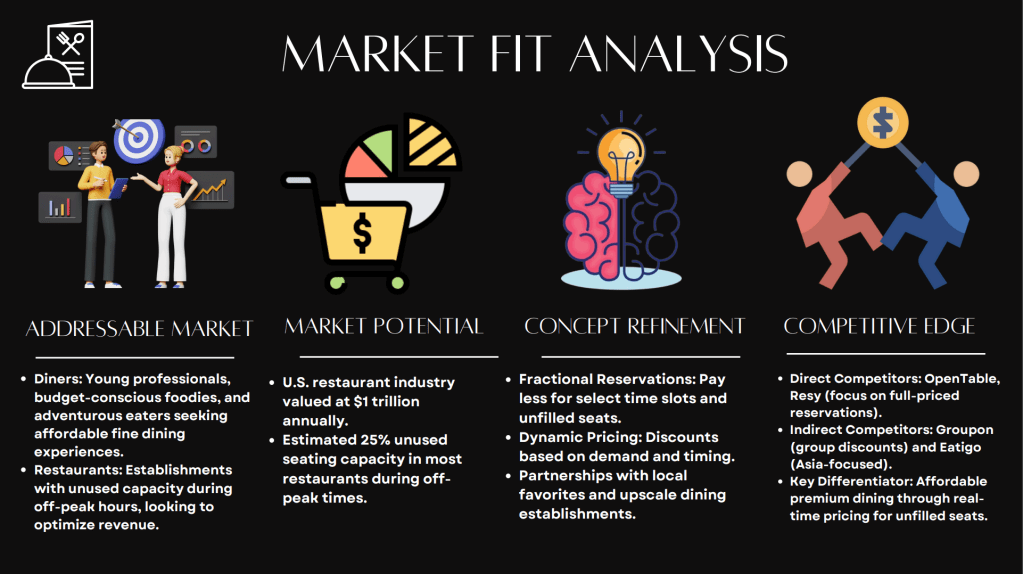
The U.S. restaurant industry is valued at $1 trillion annually, yet around 25% of seats remain empty during off-peak hours. This presents a significant opportunity for a solution like DineFlex.
Target Audience:
1. Diners: Young professionals, budget-conscious foodies, and adventure seekers who want to experience fine dining without spending a fortune.
2. Restaurants: Establishments with unused capacity that want to maximize their revenue through fractional reservations.
Competitive Edge: How DineFlex Stands Apart
While platforms like OpenTable and Resy focus on full-priced reservations, and Groupon offers bulk discounts, DineFlex brings something new:
1. Real-time pricing adjustments for unfilled seats
2. Last-minute bookings at lower rates
3. Exclusive restaurant partnerships to offer premium experiences at a discount
Marketing Strategy: Building Awareness & Adoption
If developed, a platform like DineFlex would need a strong marketing strategy to attract both diners and restaurant partners.
1. Influencer Marketing Approach
- Partner with food bloggers & lifestyle creators
- Launch social media challenges such as “Luxury Dining for $50”
- Provide exclusive promo codes through influencer collaborations
2. Organic Social Media & Content Strategy
- Educational Content: How restaurants and diners could benefit
- Showcasing Deals: Potential pricing and offers
- User Stories : How a user could save money using DineFlex
3. Paid Advertising Model
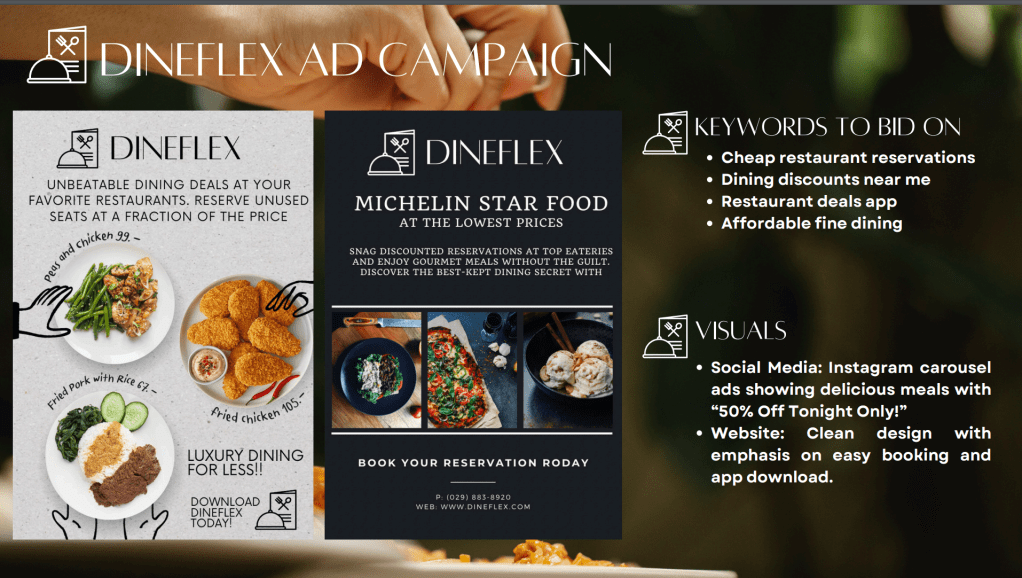
- Google Search Ads targeting searches like:
- “Cheap restaurant reservations”
- “Dining discounts near me”
- “Affordable fine dining”
- Meta (Facebook & Instagram) & TikTok Ads with broad audience targeting
Potential Challenges & Considerations (SWOT Analysis)
Strengths
- Innovative fractional pricing model for last-minute dining
- Dynamic pricing strategies for restaurants to maximize earnings
- Convenient app experience for easy bookings
Weaknesses
- Brand awareness would need time to grow against established competitors
- Reliance on discounts could initially attract only deal-seekers
- Operational complexity in managing real-time pricing and last-minute bookings
Opportunities
- Growing demand for flexible dining options
- Potential for strategic partnerships with high-end restaurants
- Use of AI and data analytics to optimize pricing
Threats
- Competition from existing platforms like OpenTable and Resy
- Potential price wars as competitors react to new business models
- Economic factors impacting discretionary dining spending
Conclusion: Exploring the Future of Fractional Dining
DineFlex was an exciting startup concept that aimed to reinvent premium dining experiences by making high-end restaurant bookings affordable and accessible.
While this idea remains in the conceptual stage, the thought process behind it reflects how data-driven decision-making, real-time pricing, and strategic marketing can be leveraged to build a strong business model.
Final Thoughts & Learnings
What this idea taught me:
- Identifying a real-world problem is the first step toward innovation
- Dynamic pricing models can be game-changers in various industries
- A solid marketing strategy is crucial for any startup’s success
DineFlex is just an idea for now, but who knows? Maybe a similar concept could transform the restaurant industry in the future!
💡 Have thoughts on this idea? Would love to hear your feedback! Drop a comment below.
 Mansi's Blog
Leave a reply to Pete Scriba Cancel reply