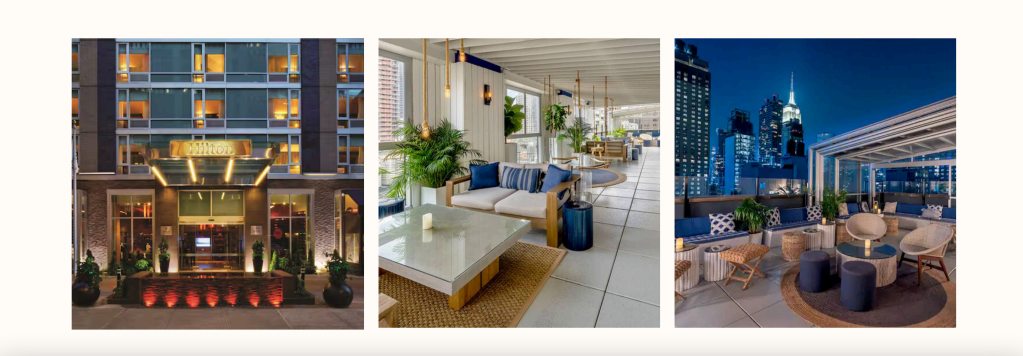
As part of my Marketing and AI course at Yeshiva University, I had the opportunity to work on a unique group project analyzing the online reputation of Hilton New York Fashion District using AI tools like Google NLP, Google Vision API, and SEO best practices. What started as a classroom assignment turned into something more meaningful when this project was selected for the university’s Spring 2025 Symposium. Here’s the story behind it.
The Problem: Can AI Improve a Hotel’s Reputation?
In a highly competitive hospitality market like New York City, even well-established brands like Hilton must maintain a strong digital presence and guest satisfaction. Our project sought to answer one big question:
Can AI-driven sentiment analysis, visual branding, and SEO improve Hilton NY Fashion District’s reputation and performance?
Project Overview: Where AI Meets Marketing
As Urban Insight Consultant — conducted a deep-dive audit across three layers of digital reputation:
1. Sentiment Analysis with Google NLP
We collected and analyzed guest reviews from TripAdvisor using Google’s Natural Language Processing. Key insights included:
- 55% positive sentiment, mostly about the rooftop bar, staff, and location.
- Negative reviews pointed to dated room decor, slow elevators, and hidden fees.
2. Visual Brand Analysis with Google Vision API
We assessed guest-uploaded images to see what stood out:
- “Rooftop View” and “Modern Design” were dominant tags — key assets Hilton could leverage more.
- Bathroom images revealed clean setups but lacked luxury appeal.
3. SEO and Digital Visibility
Using tools like Moz and SEMRush principles, we looked into:
- How well Hilton NYFD appeared in search (most mentions were from Google My Business and meta tags).
- Recommendations included better local SEO, content marketing, and user-generated content encouragement.
Recommendations at a Glance
- Upgrade room aesthetics and increase pricing clarity to match guest expectations.
- Optimize Hilton’s SEO strategy, especially around high-volume and local keywords.
- Implement AI-powered reputation tracking for real-time guest sentiment insights.
- Use the rooftop bar and location more effectively in advertising and content.
Symposium Selection
After our presentation, I refined our findings into a poster titled:
Hilton NY Fashion District: Reputation Marketing Strategy
The poster focused on three core visuals — guest sentiment chart, image tag cloud from Google Vision, and online brand mentions pie chart — along with actionable insights and a strong research foundation.
To my excitement, this poster was selected for display at the university’s Spring 2025 Symposium, representing applied AI in real-world marketing. During the event, I got to explain my work to professors, students, and visitors — and answer questions about how AI tools can drive strategic decision-making in hospitality.
Final Thoughts: Bridging Analytics and Strategy
This project was more than an academic assignment — it was proof that AI can make reputation management smarter, faster, and more guest-centric. Whether it’s a hotel or any consumer-facing brand, tapping into the voice of the customer through data and visuals can unlock opportunities for growth.
I’m grateful to Prof. Larry Cohen and Prof. Joseph Panzarella, for his guidance, and to the Katz School of Science and Health for supporting student research that connects theory with real-world impact.
Symposium Highlights
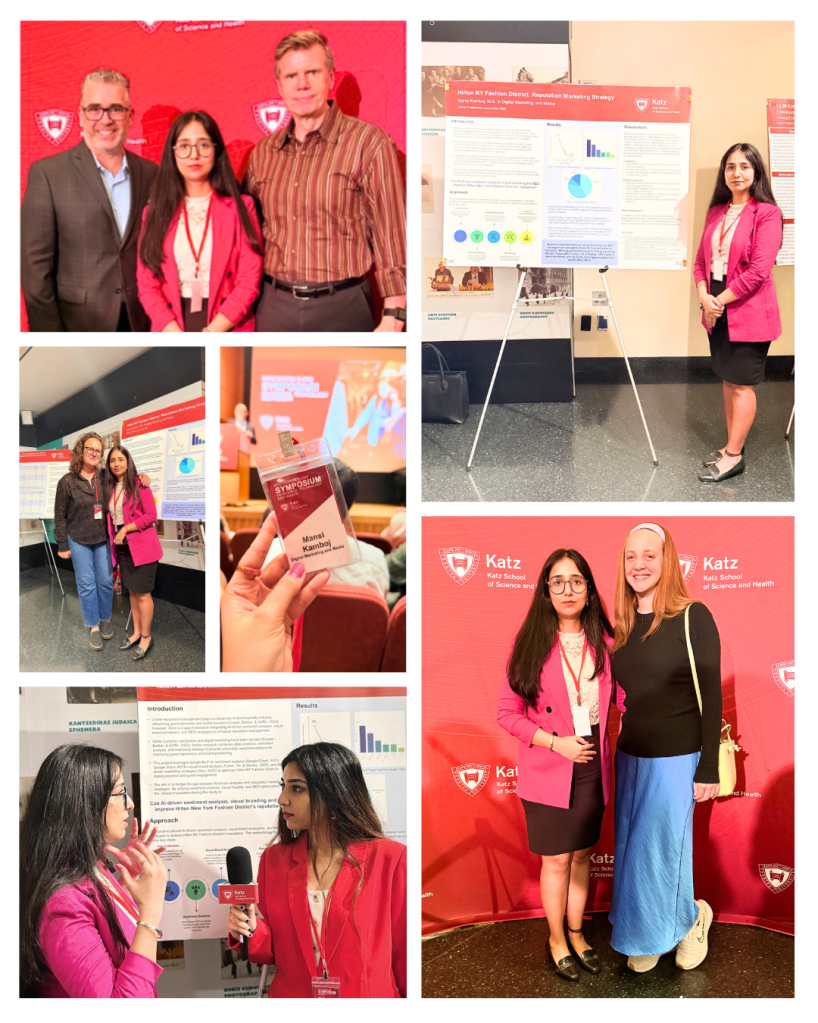
Displayed during the event at Katz School, Yeshiva University.
📌 Want to view the full poster or project deck?
 Mansi's Blog
Leave a comment