
I recently read a Wall Street Journal piece that made me pause, reflect, and honestly, rethink a lot of what I’ve learned about search and content strategy. The article explored how AI-driven platforms like ChatGPT are beginning to replace traditional search engines, and how marketers (like me!) need to evolve fast.
We’re not really “searching” anymore. We’re asking.
And we’re not asking Google, we’re asking ChatGPT.
AI Is Replacing the Search Engine Experience
In just a few months, tools like ChatGPT, Perplexity, and Bing Copilot have become go-to resources for getting fast, accurate, and conversational answers. A stat that stood out to me from the article:
“80% of consumers now resolve 40% of their online search queries without clicking any links.”
That’s a massive shift.
Think about it: millions of dollars have been poured into traditional SEO, just to rank for a query that users may never click on again.
Example: Buying a Laptop in 2025
Let’s make it real.
Old Way (Google Search):
You’d type: “Best laptops for video editing under $1,000”
- Scroll through blog articles
- Open 5 tabs
- Compare specs manually
- Click affiliate links
New Way (AI-Driven Search):
Now, people just ask ChatGPT or Perplexity:
“What’s the best laptop for video editing under $1,000?”
- You get a condensed answer immediately
- With product summaries, comparisons, and maybe even links
- No need to visit 10 websites or scroll through ads
Here’s a screenshot from when I tried it myself:
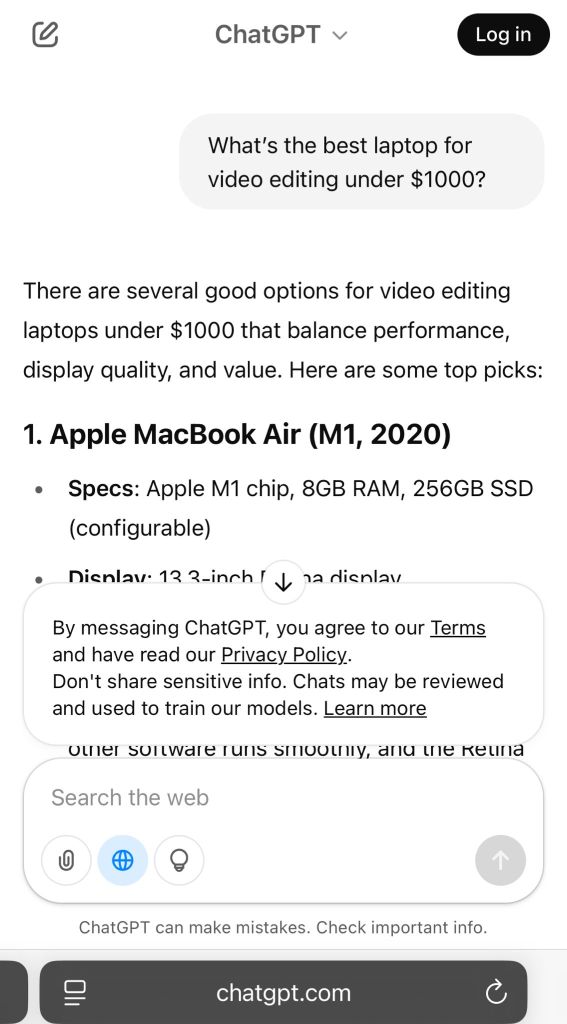
“While links aren’t always visible yet, ChatGPT’s ability to provide helpful recommendations without a search engine already shows how traditional SEO is losing ground.”
So What Does This Mean for Marketers Like Me?
It means a few things:
1. Websites Are Becoming Data Sources
Instead of being destinations people visit, your site now feeds information to bots and large language models (LLMs) like ChatGPT or Gemini.
2. New Skills Are Emerging
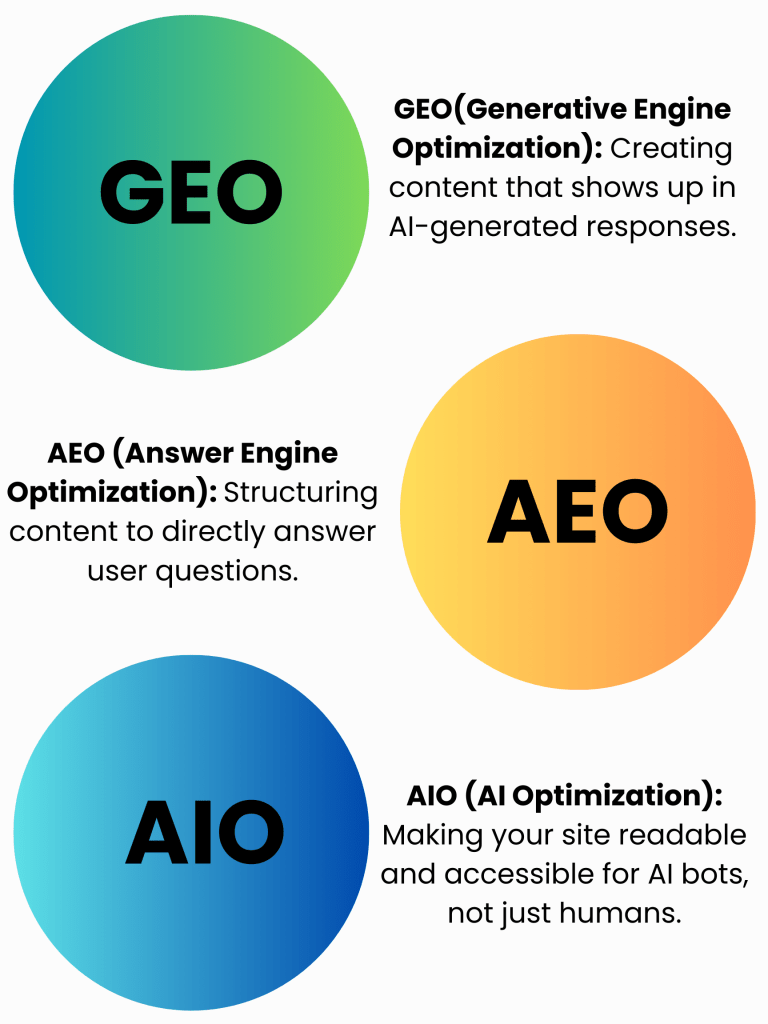
Welcome to:
- GEO – Generative Engine Optimization
- AEO – Answer Engine Optimization
- AIO – Artificial Intelligence Optimization
The future of discoverability isn’t about stuffing keywords—it’s about writing conversational content that AIs can read, summarize, and trust.
3. Tone and Structure Matter
ChatGPT favors well-structured, natural language over jargon or technical product blurbs. It’s time to start writing like you’re talking to a person, not trying to impress an algorithm.
What can be done Differently
This shift hasn’t scared me—it’s energized me. Here’s how I’m evolving:
- Rewriting content to be more human and AI-friendly
- Improving site speed and structure to help AI crawlers extract content
- Thinking beyond Google, because the future of content visibility lies in how AI summarizes, not how it ranks
But Let’s Be Real—Google’s Not Sitting Still
While AI tools like ChatGPT are reshaping the way we search, it’s also worth remembering: Google isn’t backing down. With AI-powered features like Search Generative Experience (SGE), its own chatbot Gemini, and deep integration of shopping, YouTube, and Maps—it’s still in the game.
And here’s the thing: ChatGPT isn’t always accurate.
It can hallucinate facts, provide outdated info, and lacks direct source attribution. That’s where Google still has the edge—with trusted, indexed sources and user trust.
The future might not be about AI vs. Google—it might be about how both evolve and merge to serve users better.
Final Thought
AI tools are changing how we discover, engage, and buy—but this isn’t a death sentence for search engines. It’s an evolution. As a marketer, I’m not just watching the shift—I’m adapting to it.
We’re not optimizing for clicks anymore.
We’re optimizing for conversations.
Let’s Keep the Conversation Going
How do you see AI changing the way we search, shop, and market?
Have you started adapting your SEO strategy yet?
👉 I’d love to hear your thoughts, connect with me and let’s talk more about where marketing is headed:
 Mansi's Blog
Leave a comment