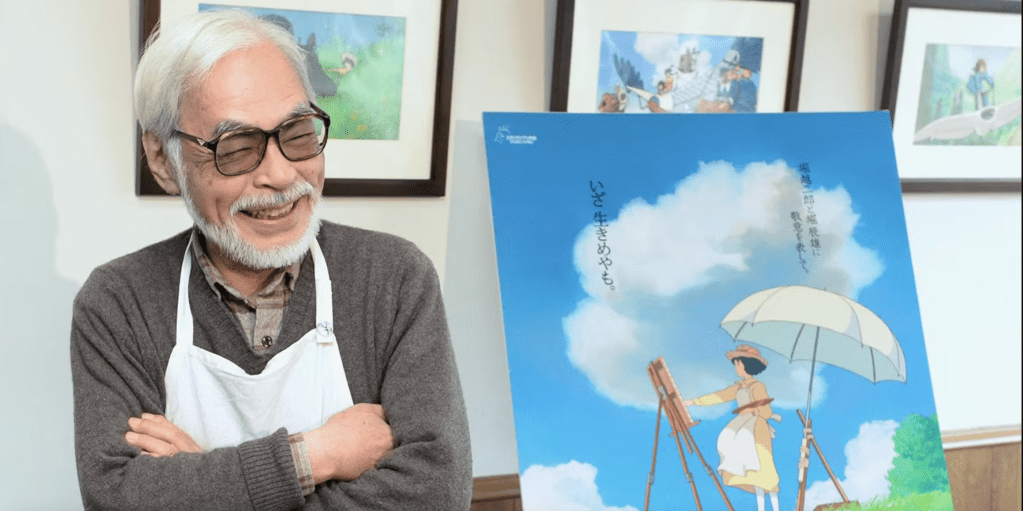
Between Brushes and Bytes: Ghibli, AI Art, and the Soul of Creativity
In a world rapidly advancing with technology, where creation can be instant and infinite, the quiet, hand-drawn beauty of Studio Ghibli reminds us that some things were meant to take time.
Studio Ghibli’s co-founder, Hayao Miyazaki, has long been revered not just for his enchanting stories, but for his belief in crafting art with care, intention, and emotion. Whether it’s the glowing lanterns of Spirited Away, the sweeping landscapes of Howl’s Moving Castle, or the quiet magic of My Neighbor Totoro, Ghibli’s worlds aren’t just drawn — they’re felt.
In a now-famous interview, Miyazaki watched an AI-generated animation clip created by a research team. His reaction was heavy with emotion:
“I strongly feel that this is an insult to life itself.”
— Hayao Miyazaki
To many, it was a jarring but honest moment — a veteran artist grappling with a future where machines can mimic in seconds what humans pour years into.
But what if this moment isn’t about opposing forces, but rather two truths that need to exist side by side?
🌿 Ghibli’s Art: Where Stillness Becomes Story
What makes Ghibli so beloved isn’t just the visual aesthetic — it’s the emotional depth behind every frame. The studio is known for animating the “in-between” moments — stirring a pot of soup, sitting in silence, or gazing out at the sea. These aren’t just filler scenes; they are the soul of the story.
In Miyazaki’s process, drawing isn’t a race. It’s a ritual. Every detail is intentional. Every pause is purposeful.
His work reminds us that the most profound stories often unfold in silence, in slowness, and in subtlety — a quiet rebellion against our overstimulated, swipe-happy world.
⚙️ AI Enters the Studio
But in 2024, something fascinating happened.
Platforms like DALL·E and Midjourney began generating “Ghibli-style” images with just a few keywords. Ethereal skies. Cozy cabins. Wide-eyed children with wind in their hair. The resemblance was uncanny — and people couldn’t get enough.
At one point, requests for Ghibli-inspired AI art became so overwhelming that Sam Altman, CEO of OpenAI, tweeted:
“Can y’all please chill on generating images? This is insane. Our team needs sleep.”
It was half-joke, half-warning — a reminder that even as AI accelerates, the humans behind it are still bound by time, fatigue, and limits.
So here we are. Living in a world where breathtaking visuals can be born in seconds, while others took decades of sweat, soul, and sketchbooks.
🤲 Can Two Worlds Coexist?
The conversation doesn’t have to be AI versus artists. It can be AI and artists. But the nuance matters.
On one hand, we absolutely must honor the dedication of creators like Hayao Miyazaki — people who committed their lives to the slow, meticulous art of storytelling. Their work is a testament to the idea that creativity is not just about producing — it’s about connecting.
On the other hand, AI is democratizing creativity. Millions of people around the world who never had access to tools, training, or artistic communities are now expressing themselves, telling stories, and exploring their imagination in new ways. That’s something beautiful.
Where traditional animation requires time, money, and resources, AI offers an entry point — especially for those whose dreams were once out of reach.
And maybe, just maybe, that’s where the future lies — not in replacing artists, but in expanding the definition of who gets to be one.
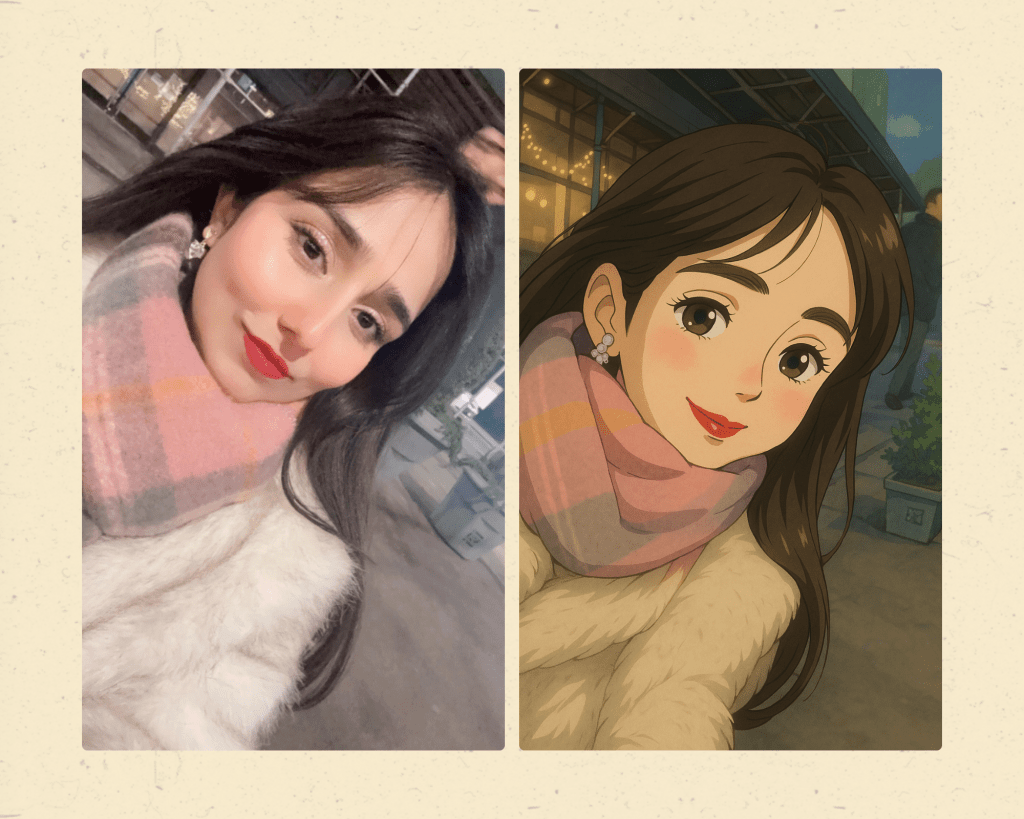
It’s surreal seeing myself through a Ghibli lens — soft, warm, and just a little magical. In a world of AI and endless filters, this reminded me why human-made moments still hit different. Both versions of me exist — the real, and the reimagined — and I think there’s room for both in art.
💬 Final Thoughts
I completely sympathize with the artists and animators who spent years, even lifetimes, honing their craft. I see their frustration, their heartbreak, and their fear of being erased in a world that values speed over soul. Their work deserves our gratitude, our admiration, and our protection.
Moreover, I also believe that AI, when used ethically and creatively, can be a force for inclusion and imagination. It is not inherently soulless — it’s just a tool. And how we choose to use it defines its impact.
This isn’t about taking sides. It’s about holding space for both reverence and innovation. For analog and digital. For brushes and bytes.
Because at the end of the day, whether it’s hand-drawn or AI-generated — the question we should keep asking is:
Does it move us?
If it does, then perhaps there’s still magic to be made.
 Mansi's Blog
Leave a comment