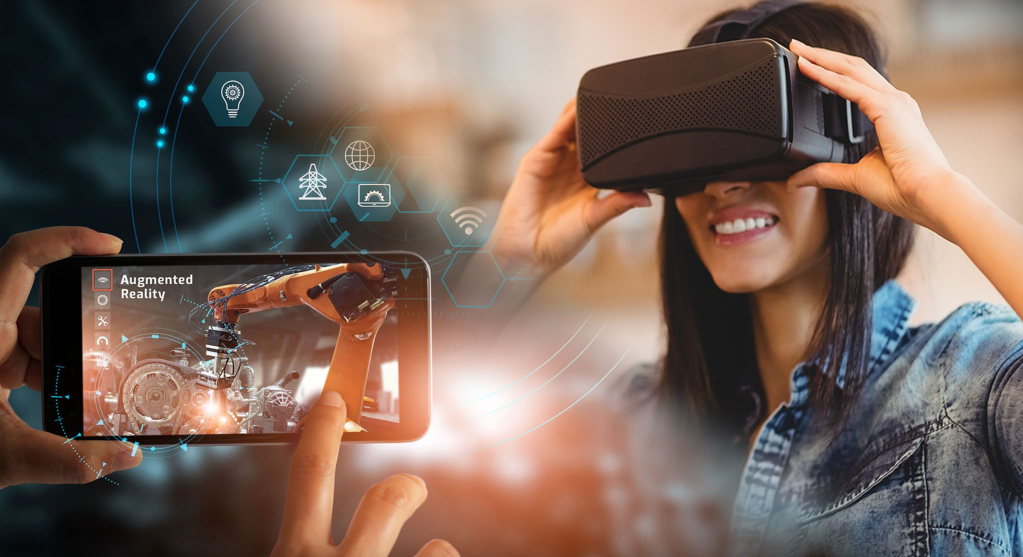
AR is one of the rising technologies being used in various industries to bring out more captivating experiences not only to businesses around the world but also to the audience.
One such fine example of applying AR into the business world is the Brand IKEA. IKEA has successfully applied virtual reality technology through the app called “IKEA Place”. It is an AR-based application that uses a mobile camera and allows users to place 3D models of IKEA fittings and furniture in their own homes, offices, schools, studios, and so on. Using this application, the users are provided with an option to visualize how the piece of furniture would look in their place before making the actual purchase.
IKEA Place has made it easier for customers to make a buying decision and try new products, colors, and textures just by using their smartphone’s camera and swiping their fingers. The app is extremely good at scaling products automatically with an accuracy of 98% based on the dimensions of the room. The AR technology used by the brand is so precise and accurate that the users can be able to see the textures of the fabric as well as how the lightning and reflections are rendered on the furniture providing an amazing shopping experience to its customers.

IKEA catalog uses augmented reality to give a virtual preview of furniture in a room

Ikea’s augmented reality app
If you like it, #Placeatreeonit | IKEA Place
Let’s have a look at how IKEA’s use of Augmented Reality (AR) technology influences various consumer behavior stages:
- Problem Recognition: In this stage, a consumer becomes aware of his needs and feels the need for the product also known as the Problem Recognition stage. At this stage, a consumer might have realized the requirement for new furniture or a desire to uplift and enhance their living space.
- Information Gathering Stage: This is a stage where a consumer explores all available options and starts gathering the information to make a purchase. Here, consumer behavior is heavily influenced by the “IKEA Place” app because it allows users to virtually place furniture in their homes by just using their smartphones. The consumers will start considering making a purchase as they get familiar with various pieces of furniture and see how they fit within their space.
- Purchase Decision: This is a final decision-making stage by consumers to make a purchase that best suits them and they made a final choice. IKEA’s AR technology impacts this stage, as consumers are already aware of how the new piece of furniture is going to look in their place and this will lead to a more confident and informed purchase decision.
- The Post-Purchase Evaluation: The application of IKEA’s AR technology contributes to the post-purchasing evaluation because it reduces the chances of dissatisfaction as consumers have the opportunity to test the product virtually and have a look at the furniture before making an actual purchase. This can lead to positive post-purchase behavior like reduced returns, repeat purchases, and potential loyal customers.
- Loyalty and Advocacy Stage: The impact of using VR technology can be seen as people are more tend to make a hassle-free purchase, this leads to a loyal customer base because the VR technology helps them to make a purchase for the right product in the first place. The customers feel more satisfied with the product and it leads them to become a part of the IKEA family. They start advocating for the brand because the brand is giving them convenience and a remarkable online shopping experience.
CONCLUSION:
The implementation of AR in any business can prove beneficial as it helps businesses to provide new opportunities, methods to attract potential customers, and several insights into how the business can operate more efficiently and effectively. IKEA’s AR technology plays a vital role in influencing the consumer decision-making process at multiple stages. It helps customers to get more involved with the brand, improving the customer experience and it will help the brand to grow and expand while creating a loyal customer base.

TYPE OF TECHNOLOGY: AI (ARTIFICIAL INTELLIGENCE)
Sephora, the global beauty brand is also leading the way by evolving the digital retail experience with AI. The brand is applying artificial intelligence technology immensely in its stores and on its apps as well. The AI technology adopted by Sephora helps customers find the specific shade of desired makeup that suits their skin tone simply by uploading a picture. To implement this, the brand has partnered with a facial analysis and visualization technology firm known as ModiFace. The technology automatically recognizes the most perfect and compatible shade for the individual user just after uploading their picture while in conversation with Sephora’s virtual assistance that helps you pick the right shades of product.
The brand is exercising a wide range of AI technology on its app as well as in the stores to help operate retail sales and also to provide a seamless shopping experience to its existing customers and attract potential customers. Some of the technologies used by Sephora are as follows:
- Visual Artist: This feature allows users to see the application of their desired product on their facial avatars before actually buying it. This feature makes shopping more exciting and fun for shoppers.
- Tap and Try: It gives users the access to tap on the product and apply it virtually be online or in-store.
- Color IQ: This feature uses a device that scans the surface of the user’s skin and assigns a color IQ number that reveals scientifically precise foundation matches.
- Pantone Test: This suggests the best possible products to a consumer based on their taste and preferences.
- Fragrance IQ System: This is one of the most amazing features of AI for which Sephora partnered with Inhalio and it helps in providing a dry scent which helps the customer to try on the smells of perfumes without even trying it.
Sephora Virtual Artist App – Modern AR/VR Technology

Sephora Visual Artist on Sephora’s app
Let’s dive into how Sephora’s use of AI and AR technology influences various consumer behavior stages:
- Problem Recognition: The stage in which consumer become aware of their needs. In this stage, the consumer might have felt the need or desire to have new makeup.
- Information Gathering Stage: In this stage, the customer behavior would have been influenced by the AI technology used by Sephora, because the consumers once aware of their need, they start exploring the new available options and they come across this option provided by Sephora where they can try on the new products without actually visiting the store.
- Purchase Decision Stage: The stage where consumers make a final decision and choose the final product they want to buy. This stage is heavily influenced by Sephora’s virtual assistance and AI technology. Since the user had tried the various shades of a new product by uploading their image on the app they have found the right product for them that suits their skin tone and elevates their look. They make their decision to buy it.
- Post-Purchase Evaluation: The execution of Sephora’s AI technology contributes to the post-purchase evaluation. This stage is critical for any business but the AI technology for Sephora has made it simple because now there are fewer chances of customer dissatisfaction with the product as they have already tried it before buying it.
- Loyalty Stage: Once customer receive the product and it lives up to their expectation, they tend to become loyal to the brand. By using AI technology, Sephora has successfully achieved this milestone by providing a more informative customer shopping experience. AI technology used by Sephora helps people get more engaged in the app because it gives them an opportunity to try new and varied products on one platform. This makes customers feel like they are also a part of the brand which results in advocacy and creating a strong loyal customer base.
CONCLUSION:
As we know every individual is different and precise personalization in the beauty and makeup industry can be a challenge but AI is trying to bridge this gap between consumers and brands. AI technology helps brands to continue to focus on their innovation and experiments with new technology as this will help the brand become aware of the needs of its customers and will leverage customer loyalty programs as well.
 Mansi's Blog
Leave a comment